
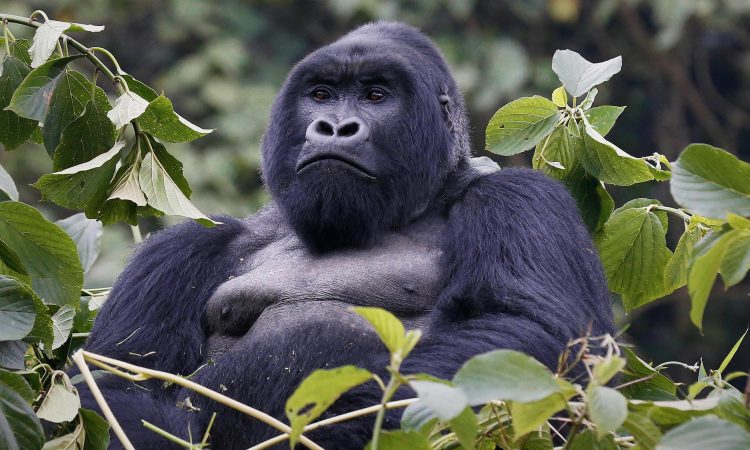
The deaths of four mountain gorillas from Rwanda and the Democratic Republic of Congo (DRC) due to cancer within the past year have sparked concern among conservationists and tourism stakeholders across the Greater Virunga landscape.
The issue was highlighted during the annual stakeholders' meeting for the Bwindi–Mgahinga Conservation Area, held at White Horse Inn in Kabale.
Organised by the Uganda Wildlife Authority (UWA), the meeting brought together conservation experts, tourism stakeholders and wildlife organisations to review conservation efforts and tourism trends in the transboundary gorilla habitat shared by Uganda, Rwanda and the DRC.
Dr Ricky Okello Okwir, a veterinary doctor specialising in mountain gorillas, said the four gorillas died after developing melanoma, a form of cancer.
"The disease was identified in the affected countries and confirmed. Although no cases have been reported in Uganda, we are closely monitoring the situation and taking preventive measures," Okwir said.
He reassured stakeholders that melanoma is not a contagious disease but warned that affected gorillas become progressively weaker as the illness advances.
"Gorillas that develop melanoma become severely weakened and gradually lose their ability to feed properly," he said.
Okwir said wildlife health experts in Uganda are maintaining heightened surveillance to ensure any suspected cases are detected early.
Henry Mutabazi, Country Coordinator for Gorilla Conservation Uganda, described the deaths as worrying, saying they underscore the need for stronger regional collaboration to safeguard the endangered primates.
He warned that any significant threat to mountain gorillas could also have implications for tourism, which depends heavily on gorilla trekking across Uganda, Rwanda and the DRC.
The meeting also discussed the continued threat posed by Ebola, with experts calling for stronger disease surveillance and preventive measures to minimise the risk of transmission between humans and wildlife.
Among those participating in the discussions were Henry Mutabazi of Gorilla Conservation Uganda and James Byamukama, Chief Executive Officer of the Jane Goodall Institute Uganda.
Worldwide, the mountain gorilla remains one of the world's most endangered great apes, with an estimated population of about 1,063 individuals.
The largest population is found in Uganda's Bwindi Impenetrable National Park, making continued conservation efforts critical to the species' survival.
